

CMA Part 1 vs Part 2: Which Is Harder

CMA Part 1 vs Part 2: Which Is Harder—and Which Should You Start First? Many students get confused about CMA Part 1 vs Part 2 when they first begin their CMA journey. They open the CMA Part 1 syllabus and CMA Part 2 syllabus, compare the topics, and immediately wonder: “Should I start with CMA Part 1, or should I take Part 2 first?” This is a very common student situation. You feel excited to start CMA, but once you see both parts, the question becomes bigger: CMA Part 1 vs Part 2 — which one is better to start with, and which one feels harder? Here’s the truth: there is no universal “harder part.” For some students, CMA Part 1 feels easier because the CMA Part 1 syllabus is more familiar. For others, the CMA Part 2 syllabus feels more comfortable based on their work experience or study style. The smart decision in CMA Part 1 vs Part 2 is not about choosing the “harder” or “easier” part — it’s about choosing the right starting point based on your background and how you study. That one decision can save you months. The Difference in One Line When comparing CMA Part 1 vs Part 2, a simple way to understand the difference is this: Think of CMA Part 1 as learning how a business runs internally. The CMA Part 1 syllabus focuses on how costs behave, how budgets are prepared, why performance changes, and how internal controls support operations and reporting. By contrast, the CMA Part 2 syllabus feels more connected to business decisions and finance. It focuses on analyzing financial statements, making financial decisions, evaluating risk, and thinking strategically as a management professional. So in CMA Part 1 vs Part 2, Part 1 is more about internal operations and performance control, while Part 2 is more about analysis, finance, and strategic decision-making. This is why some students prefer to begin with CMA Part 1, especially if they want a strong base before moving into the broader decision-making topics in Part 2. Which CMA Part Feels Harder (and Why) When students compare CMA Part 1 vs Part 2, the difficulty usually depends more on learning style than on the exam itself. Students who struggle with formulas, costing, or calculations often find CMA Part 1 challenging at first because parts of the CMA Part 1 syllabus (especially areas like variance analysis) can feel like a puzzle. But once they understand the logic and the story behind the numbers, CMA Part 1 becomes very manageable — especially with structured practice and regular revision. On the other hand, the CMA Part 2 syllabus can feel harder for students who are less comfortable with finance concepts or who do not like decision-based questions where more than one option looks correct. In CMA Part 1 vs Part 2, Part 2 usually rewards students who practice exam-style decision questions consistently instead of only reading theory. So the real question in CMA Part 1 vs Part 2 is not “Which part is harder?” The better question is: Which part will give you faster momentum based on your background, confidence, and study style? CMA Part 1 vs Part 2: Which Part Should Students Start First? if you are a student or fresher and want a strong, structured foundation, starting with CMA Part 1 often works very well. The CMA Part 1 syllabus helps build core management accounting thinking that supports your learning later in the CMA journey. It also gives many students a clearer practice structure, so progress feels more visible and motivating. CMA Part 1 vs Part 2 for Working Professionals in Finance If you already work in finance, or you are naturally comfortable with ratios, analysis, and decision-making, starting with Part 2 can be a smart choice. The CMA Part 2 syllabus often feels more practical in this case because you can connect topics to real work situations. That usually makes learning faster, easier, and less stressful. CMA Part 1 vs Part 2: What to Choose If You’re Still Unsure If you’re still unsure about CMA Part 1 vs Part 2, we usually recommend choosing the part where: you understand topics faster, and you can practice consistently without fear In CMA Part 1 vs Part 2, momentum matters more than overthinking. The best starting part is often the one that helps you build confidence quickly. CMA Part 1 vs Part 2 Fast-Finish Strategy Students Love Most students do not struggle in CMA Part 1 vs Part 2 because they are weak. They struggle because they stop studying for 3–6 weeks, forget topics, and then the CMA Part 1 syllabus or CMA Part 2 syllabus starts to feel too big. A fast-finish strategy for CMA Part 1 vs Part 2 is built on three simple things: Start practice early (don’t wait until “finishing theory”) Follow progression (basic → exam-level MCQs) Add mocks after covering around 60–70% of the syllabus so timing improves CMA Part 1 and CMA Part 2 Syllabus Revision Tip That Improves Scores A small mistake log can make a big difference in both CMA Part 1 and Part 2 preparation. When students revise only their mistakes every week, their scores usually improve faster than students who keep re-reading notes from the CMA Part 1 syllabus or CMA Part 2 syllabus without targeted correction. If you want, I can also give you 5–8 SEO-friendly H2/H3 heading options for this same article (more clickable + less repetitive) while still keeping the keyphrases strong. How We Help You Choose the Right Starting Part (and Stay Consistent) When students join us, we don’t just hand them a syllabus and say “good luck.” We help you pick the best starting part based on your background and time availability, and then we support you with a structured plan, recordings for revision, progressive practice, and mock readiness. Tell us your background (student/fresher/working) and how many hours you can study weekly. We’ll recommend whether you should start with Part 1 or … Read more

CMA Eligibility & Registration in UAE

CMA registration in UAE

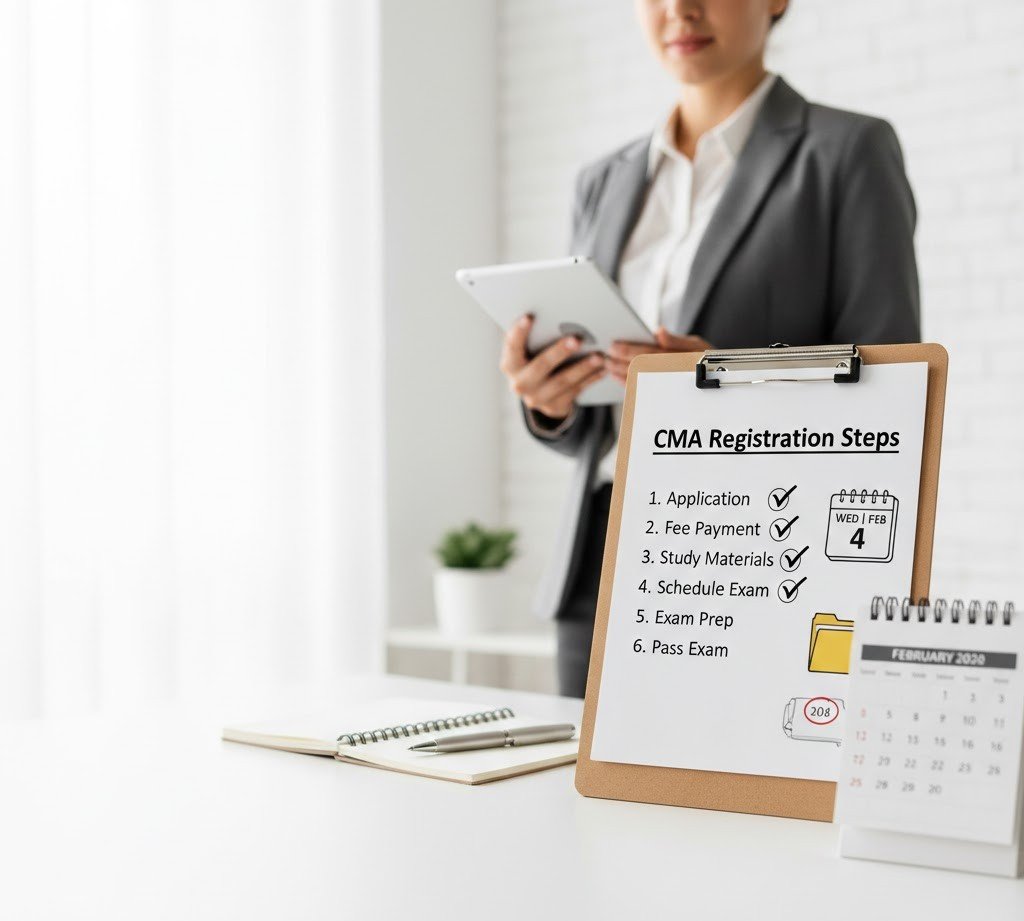
CMA Registration in UAE: How to Register Without Confusion CMA Registration in UAE is not as complicated as it seems — the problem usually happens when students miss one step, misunderstand the process, or delay fee payment. That can cost both time and money. If you’re wondering how to register for CMA exam, this clean step-by-step guide will help you understand the process clearly and move forward with confidence. Step 1: Understand CMA Eligibility requirements. Before starting CMA Registration in UAE, it’s important to understand the basic process and CMA eligibility requirements. To earn the CMA certification, students generally need to complete: official registration and payment passing CMA Part 1 and Part 2 meeting education and experience requirements as per CMA rules Many students ask about CMA eligibility requirements before they begin. Even if you are still completing your degree or work experience, you can often start your preparation early and plan your CMA Registration in UAE in the right way so you don’t lose time later. Step 2: Choose Your CMA Exam Window A key part of how to register for CMA exam is selecting the right exam window based on your preparation level. CMA exams are usually conducted in three testing windows each year. The best approach is to: choose a target exam window build your study plan backward from that date keep a buffer for revision and mock exams Choosing the right window early makes CMA Registration in UAE much smoother and helps you avoid rushing through the process. Step 3: Pay Official CMA Fees and Register This is the most important step in how to register for CMA exam because registration is completed only after the required payments are made. Students usually pay: IMA membership fee (depends on your category) CMA entrance fees (one-time) exam fee for each part Understanding CMA entrance fees in advance helps you plan your budget properly and avoid delays during CMA Registration in UAE. After payment, you can move forward with exam scheduling. Step 4: Decide Part 1 or Part 2 First When planning how to register for CMA exam, many students also ask which part they should take first. You can choose either Part 1 or Part 2 first. The right choice depends on: your background (finance/accounting) your available study time your confidence in certain topics At this stage, students should also keep CMA eligibility requirements in mind while planning their exam sequence and preparation timeline. We help students choose the right starting part based on their profile so their CMA Registration in UAE journey is more organized and practical. Step 5: Schedule Your Exam Properly Once your registration and fee payment are done, the next step in how to register for CMA exam is scheduling your exam correctly and early. Scheduling early is important because: you get your preferred dates you reduce last-minute stress you keep your preparation consistent Proper scheduling is one of the simplest ways to make CMA Registration in UAE easier and more effective, especially for working professionals and students managing multiple commitments. Common CMA Registration Mistakes (Avoid These) Many students focus only on CMA Registration in UAE and forget that success also depends on planning, scheduling, and the right support system. Even if you understand how to register for CMA exam, these common mistakes can slow down your progress. Mistake 1: Registering Without a Study Plan Result: Delays, stress, and wasted fees. Many students complete CMA Registration in UAE first and assume they will “start studying soon.” Without a clear study plan, preparation becomes inconsistent, exam confidence drops, and students may end up postponing after paying CMA entrance fees and exam fees. Mistake 2: Waiting Too Long to Schedule Result: Limited slots and last-minute panic. A big mistake in how to register for CMA exam is delaying the scheduling step after payment. When students wait too long, preferred exam dates may not be available, which creates pressure and affects preparation quality. Mistake 3: Joining a Course With Weak Support Result: Students lose consistency and struggle with practice. Choosing a course only based on price can create problems later. During your CMA Registration in UAE journey, it is important to join a training provider that offers proper guidance, follow-up, doubt support, and structured practice. Strong support helps students stay consistent while meeting CMA eligibility requirements and exam goals. Mistake 4: Studying Without Exam-Style Practice Result: Knowledge without performance. Some students understand concepts but do not practice in exam format. This is one of the biggest reasons students struggle even after completing the syllabus. Along with understanding CMA eligibility requirements and how to register for CMA exam, students should focus on mock exams, timed practice, and exam-style questions to improve performance. How We Support You (Registration + Preparation) We don’t just teach CMA at Infinity Training International, we guide you step by step through the full process, from preparation to CMA Registration in UAE. We help you with: how to register for CMA exam step by step understanding CMA entrance fees and other official costs checking basic CMA eligibility requirements before you start choosing whether to begin with Part 1 or Part 2 creating a realistic study plan based on your schedule training, recordings, structured practice, and mock exams continuous support until you feel confident for the exam If you are planning CMA Registration in UAE and want clear guidance on CMA eligibility requirements, CMA entrance fees, and how to register for CMA exam, contact Infinity Training International today. We’ll help you with the full CMA process — registration, fees, and a clear study plan. FAQs Can I register for CMA from UAE? Yes. UAE students can register and schedule CMA exams as per the official process. Do I need to finish my degree before starting CMA? Many students start preparation early. The final certification requirements depend on the official CMA rules. Which is better to start, CMA Part 1 or Part 2? It depends on your background and comfort. We help you pick the best … Read more

CMA Course Fees: Full Cost Breakdown + How to Save Money

CMA Course Fees

CMA Course Fees in UAE & Middle East (2026): What You’ll Really Pay — and How to Pay Less If you’re planning to become a Certified Management Accountant, one of the first questions you’ll ask is simple: “How much does the CMA course cost in UAE ?” And the honest answer is: your total CMA cost comes from two parts: Official CMA fees paid to the Institute of Management Accountants (IMA) CMA training fees paid to your institute (classes + materials + support) This blog breaks down both—clearly, step-by-step—so you can budget confidently and avoid overpaying. CMA Certification Cost (Official Fees) — Professional vs Student When students ask “What is the CMA cost?”, we always explain it in 3 simple steps: 1) Become an IMA member Professional members: $295 / year + $15 one-time processing fee Student members: $147 / 3 Years 2) Pay the CMA program entrance fee Professional members: $300 one-time fee (valid for 3 years) Student members: $225 one-time fee 3) Register to sit for the exam (per part) Professional members: $545 per part Student members: $407 per part Since CMA has 2 parts, exam fees apply twice (Part 1 + Part 2). Our Group Registration Discounts We also support students with group-based registration benefits: Professional (Group Benefit) 50% discount in IMA registration as a group 20% exam discount  Student (Group Benefit) 50% discount in IMA registration as a group: $186 USD 35% discount on exam fee: $264.50 (Payment in 36 months) CMA Training Fees in UAE: What You Should Expect Official fees are only one part. The other part is training, and this is where students in UAE often make the wrong choice. A CMA course should not be “just classes.” A good program must include an exam-focused system: Live classes (structured timetable so you don’t lose consistency) Session recordings (so you can revise and never miss learning) Simplified notes (so topics feel clear, not heavy) Topic-wise MCQs (easy → exam level progression) Mock exams + review (timing + confidence + accuracy) Mentor support/Q&A (so doubts don’t pile up) Quick checklist before you pay any institute Do they provide recordings for every class? Do they give a structured practice system (topic tests + mocks)? Do they guide you with a study plan for Part 1 / Part 2? Do they support you until you’re confident for the exam? If any of these are missing, students usually end up spending more later—either on extra materials, retakes, or switching institutes mid-way. How to Reduce Your Total CMA Course Fee Here’s how students save money without compromising results: Choose one clear system and stick to itSwitching materials mid-way is expensive in time and cost. Pick your exam window early and study backwardA fixed target keeps you consistent and avoids delays. Prioritize practice + revision (not only reading)Passing CMA is about performance—MCQs, mocks, time management. Choose training that includes everything you needWhen recordings, notes, MCQs, mocks, and support are included, you avoid buying “extra” resources later. Why Our CMA Training Is Affordable — Without Reducing Quality Our goal is simple: make CMA achievable for students in UAE with high-quality training at a reasonable cost. We focus on what actually helps you pass: clear teaching (simplified approach) structured study plan progressive MCQ practice mock exams + revision strategy continuous support Instead of “premium pricing,” we build a complete passing system that supports both students and working professionals. Ready to Get Your Exact CMA Fee Plan? Because CMA cost depends on your category (professional/student) and the best registration route, we’ll share a clear plan that includes: your official fee path (professional vs student) any applicable group benefit option a realistic timeline (Part 1 + Part 2) the best training plan based on your schedule Contact us now to get the complete CMA fees + course details and a step-by-step plan to finish both parts confidently.

Hock Vs Gleim Materials

CMA USA Study Materials

HOCK vs Gleim: Choosing the Best CMA USA Study Material for Your Success If you’re preparing for the CMA USA exam, one of the most important decisions you’ll make is choosing the right CMA USA material. With several well-known options in the market, HOCK International and Gleim stand out as two of the most trusted names. But which one fits your learning style, background, and schedule? Here’s a practical comparison to help you make the right choice. HOCK International – Ideal for Conceptual, Structured Learning HOCK is well-known for its detailed and structured approach. The content is designed to build strong conceptual understanding, making it especially helpful for beginners or professionals who are not from an accounting background. The explanations are thorough, covering every angle of the topic to ensure clarity and depth. However, some candidates — especially those with industry experience — may find HOCK’s approach time-consuming, as it goes deeper than necessary for exam prep. That said, it provides peace of mind for anyone looking for a guided, no-rush learning path. Best for: Freshers, non-accounting backgrounds, or working professionals looking for clarity and structure. Here’s a practical comparison to help you make the right choice. Gleim – Practice-Heavy and Time-Efficient Gleim takes a more exam-oriented approach. Its CMA USA material is concise and to the point, with a strong focus on practicing questions and building exam speed. The structure assumes you have a good foundation in accounting principles, so it’s ideal for professionals or re-takers. While Gleim offers an excellent question bank and outlines, it may not be the best standalone option for those who need step-by-step learning or conceptual explanations. It’s fast, focused, and efficient — but assumes you can keep up. Best for: Experienced learners, exam re-takers, or accounting professionals who want to fast-track their prep. However, some candidates — especially those with industry experience — may find HOCK’s approach time-consuming, as it goes deeper than necessary for exam prep. That said, it provides peace of mind for anyone looking for a guided, no-rush learning path. Best for: Freshers, non-accounting backgrounds, or working professionals looking for clarity and structure. Here’s a practical comparison to help you make the right choice. How Infinity Training Simplifies CMA Prep At Infinity Training International, we know that working professionals and busy students often struggle to finish these bulky materials — whether it’s HOCK or Gleim. That’s why we’ve taken a smarter route. We’ve summarized the best of both materials into capsuled PDFs that are: Easy to understand Short and focused Designed to preserve the essence of each topic without the overwhelm Alongside these summaries, we also provide: Downloadable Excel worksheets to help with practice Topic-by-topic breakdowns arranged for clarity Practice questions organized by difficulty level — from beginner to advanced Access through our structured learning portal for seamless revision We’ve done the heavy lifting so you don’t have to — giving you a smart way to study and pass the CMA exam, even with a busy life.   Final Thoughts: Which CMA USA study Material Should You Pick? Choose HOCK if you prefer depth, explanation, and structure Choose Gleim if you value speed, self-revision, and question practice Choose Infinity if you want a smart, simplified system that blends both — designed for results

3 in 1 Package

CMA - IFRS - Fin Modelling

2900 Dhs Only

Some of our CMA holders

Veeran Glenn
cma course in riyadh
M.Atef Alashry
CMa certification in Dubai
Hina Raheem
Rohan Mathew
cma course in abudhabi
Norina Sharfi
CMA course in Saudi Arabia
Rashid Daroge
CMA Success Stories Through Shailesh at Infinity
Shailesh Saveen
CMA Course in Sharjah
Anil Dalmeida
Abde Ali Masalawala
CMA certification in Bahrain
Aaron Menzes
CMa Course in Kuwait
Hani Alyousef
Abbas Magar - Cma student Dubai
Abbas Magar